Prime Minister Statement, delivered in Fiji on Tuesday 6 October
Kia Orana, Talofa, Ni Sa Bula Vinaka.
Prime Minister Rabuka and Prime Minister Teo – meitaki maata to your Governments and people for the warmth of their welcome and generous hospitality.
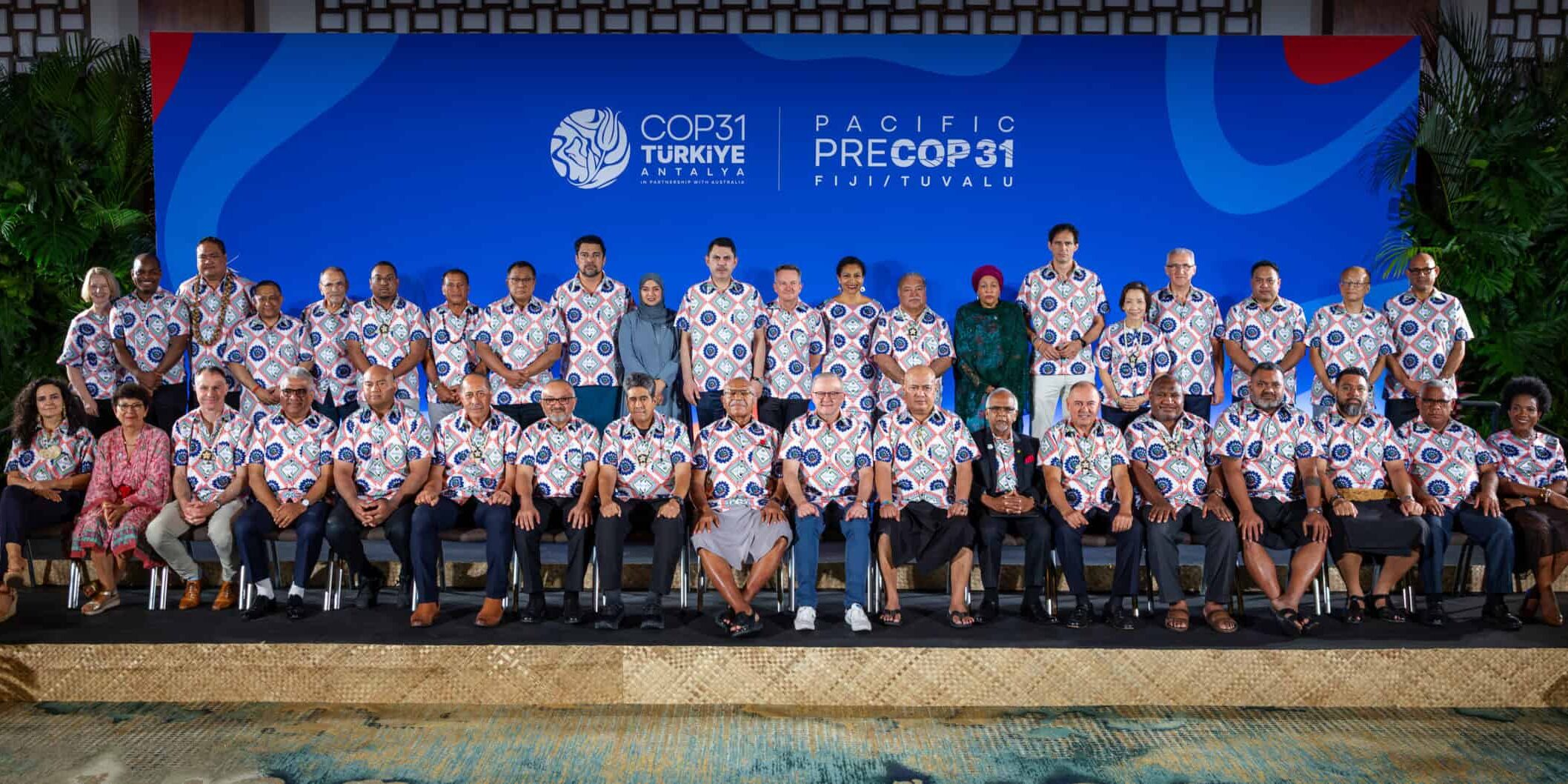
Colleagues, what a privilege it is to finally welcome a PreCOP to the Pacific. And what a responsibility we shoulder as Leaders in tackling the ultimate security challenge of our generation.
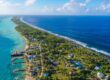
A responsibility we feel all the more keenly having spent the last 24 hours in one of our most beautiful nations.
This was my first visit to Tuvalu. I pray it will not be my last.
The conditions that the people of Tuvalu are forced to live with, are deeply familiar to my people, particularly those in our Northern most remote region. Communities. Homes. Our very future. Threatened every day.
Imagine living with the knowledge that unless the world cuts emissions, the land upon which you stand, and upon which your ancestors rest, could be lost.
Imagine being a Government leader, having to tell the most vulnerable parts of your nation that they must wait for the support necessary to keep their children fed, educated, healthy, and happy.
These are choices no Leader wants to make. Yet they are choices our governments face.
Well, the Pacific is not waiting to be told help is coming soon. We are identifying our risks, developing our solutions like the PRF and making the hard choices about our future and our ocean.
Last month, our country launched LiDAR and our GeoPortal – technologies that have been implemented a lot quicker in other countries, and we congratulate you on this – but tools we need to strengthen our evidence for planning and understanding risks.
Because too often, the Pacific is viewed through the lens of risk. And that assessment comes with more conditions, more criteria, more hurdles before climate finance can reach our communities – and often imposed by institutions and decision-makers who are yet to set foot in our region.
We recognise the need for accountability. We ask that the way it is applied recognises the Pacific and the Pacific way.
We’ve heard a lot of numbers these last two days. Let me share one of my own. More than 50 invitations extended to world leaders, including all G7 nations, and four of the five permanent members of the UN Security Council, to see for themselves what high emissions are doing to our nations and our ocean. An ocean that covers nearly one-third of the Earth’s surface.
We are grateful to those who came. From those who could not be here, we still need action that matches the scale of the challenge.
If the world is prepared to assess our suitability for climate finance, why is it not equally prepared to scrutinise whether those responsible for delivering it are meeting their obligations?
If the world is capable of mobalising hundrends of billions in a few months to counter the impact of the global fuel crisis. Why can we not place the same urgency and commitment applied to climate finance?
One could infer that we have been denied our greatest opportunity to equalise the playing field of climate response.
Colleagues, climate finance must be judged by what countries and communities have delivered. The Tuvalu Coastal Adaptation Project is living proof that the Pacific is more than capable: in knowledge, in expertise, in leadership, and in accountability.
Will we see more projects, like TCAP, in our region, at an accelerated rate of delivery? And will that support be matched by the emissions reductions required to keep 1.5 degrees within reach?
We need both. Adaptation has limits. And these are questions posed to our visitors. The Pacific cannot answer these questions alone. We do not dominate global funding decisions, and we are certainly not high emitters.
And this is the message I take from Tuvalu, in the spirit of Taku Pakasoa: unity must mean more than standing together for a Declaration that is completely voluntary. It must mean following through together.
Climate change does not ask the Pacific to volunteer to be vulnerable. Climate change has been given its power and ferocity by high emissions, forcing an entire region, to change, with urgency.
Today, we ask the same urgency of our partners. Because urgency is a two-way street.
Back Pacific leadership with the finance so we can get on with our solutions. Deliver the emissions reductions needed now, so that my descendants can stand on the shores of Funafuti, as I have today.
Show up. Be the example future generations require of us.
Fakafetai lasi. Vinaka vakalevu. Meitaki ma’ata.